
At Piccolo House, material selection is a foundational decision. From the intricate brickwork of 385 Gore Street, Fitzroy to the travertine at Piccolo House, South Melbourne, and the board-formed concrete at Elwood House, each project reveals a careful dialogue between architecture, craft and time.
The approach begins with a simple premise: choose materials that improve with age. As Managing Director Michael Piccolo explains, durability is not only practical but philosophical. “When we’re selecting finishes and materials, it has to be beautiful, but it also has to be practical, hard-wearing and able to stand the test of time.”
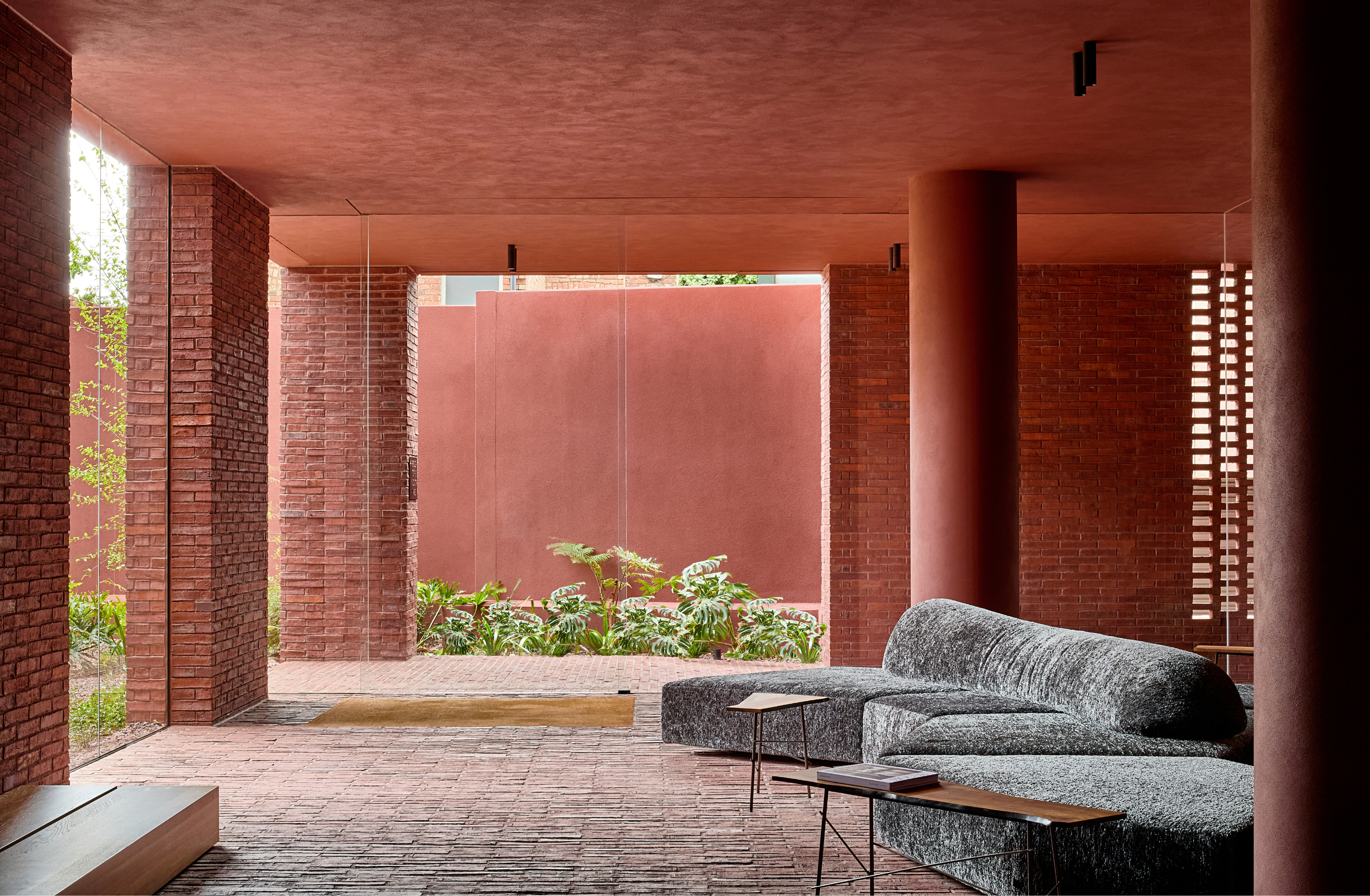
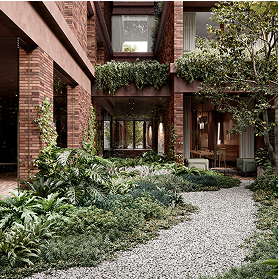
At 385 Gore Street, that thinking is expressed through brick. Inside the lobby, the brickwork has been detailed with precision, transforming what is often seen as a utilitarian material into something sculptural and tactile. Across the floor, sweeping up to a hit-and- miss pattern along the walls, the use of brick shows the level of craft behind the construction.
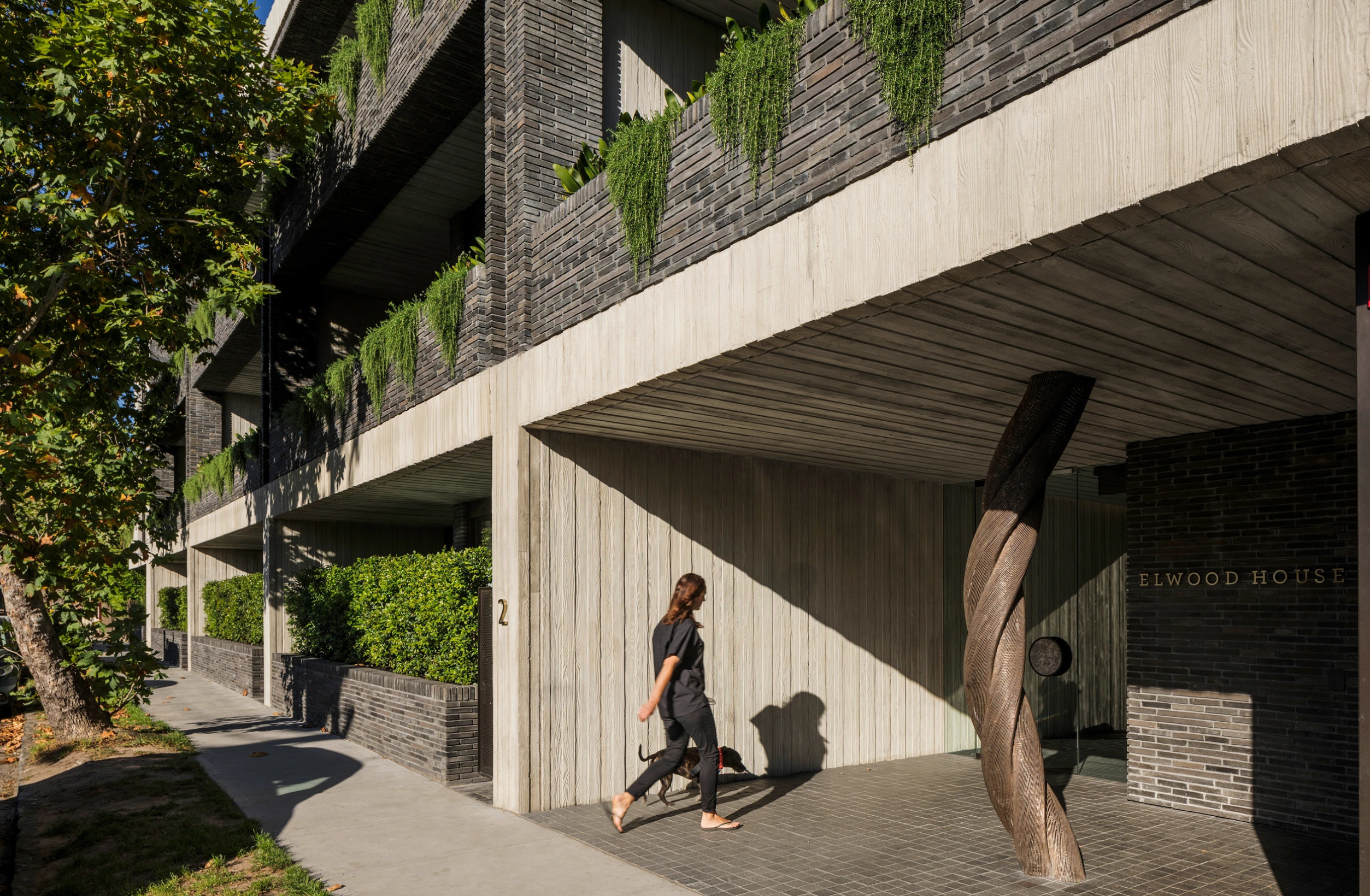
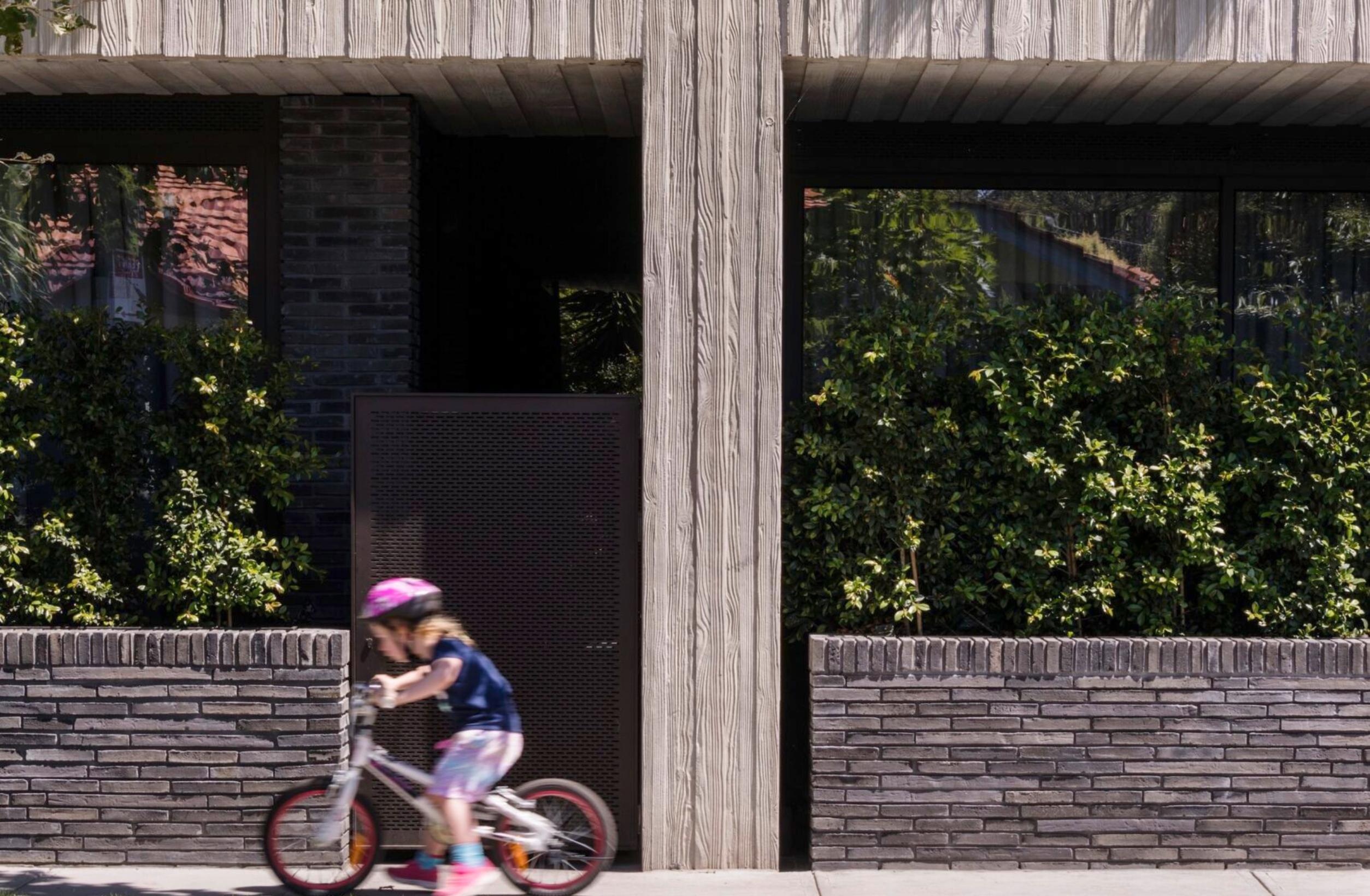
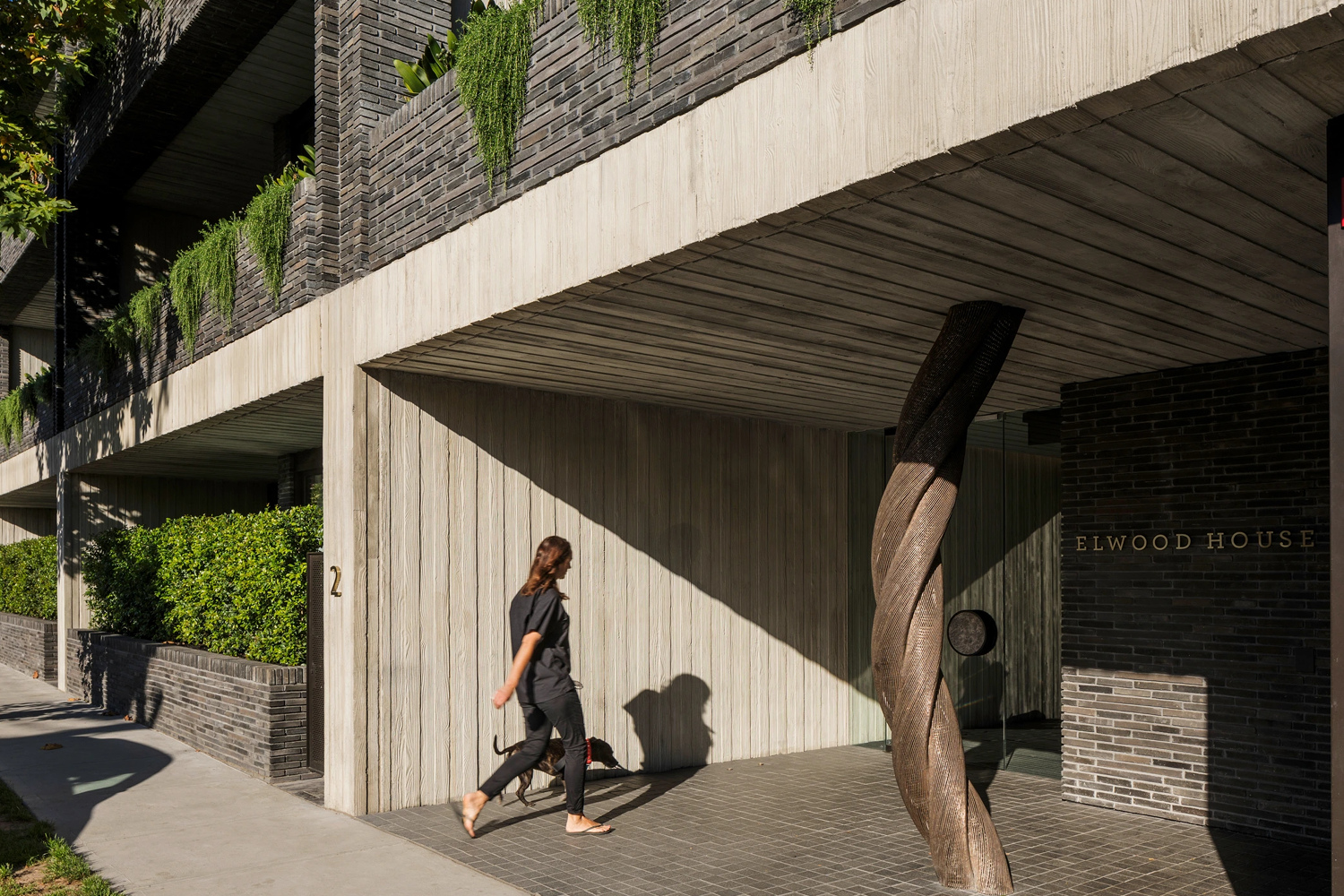
At Elwood House, the material palette takes on a more elemental quality. Board-formed concrete external walls reveal the imprint of the timber boards used in their casting, recording the construction process directly into the architecture. Alongside this, hand-laid Danish brick introduces depth and a sense of permanence. A tried and tested combination, the use of concrete and brick creates a balance between robustness and refinement – a blend we’re always striving to reach between contemporaneity and timelessness.
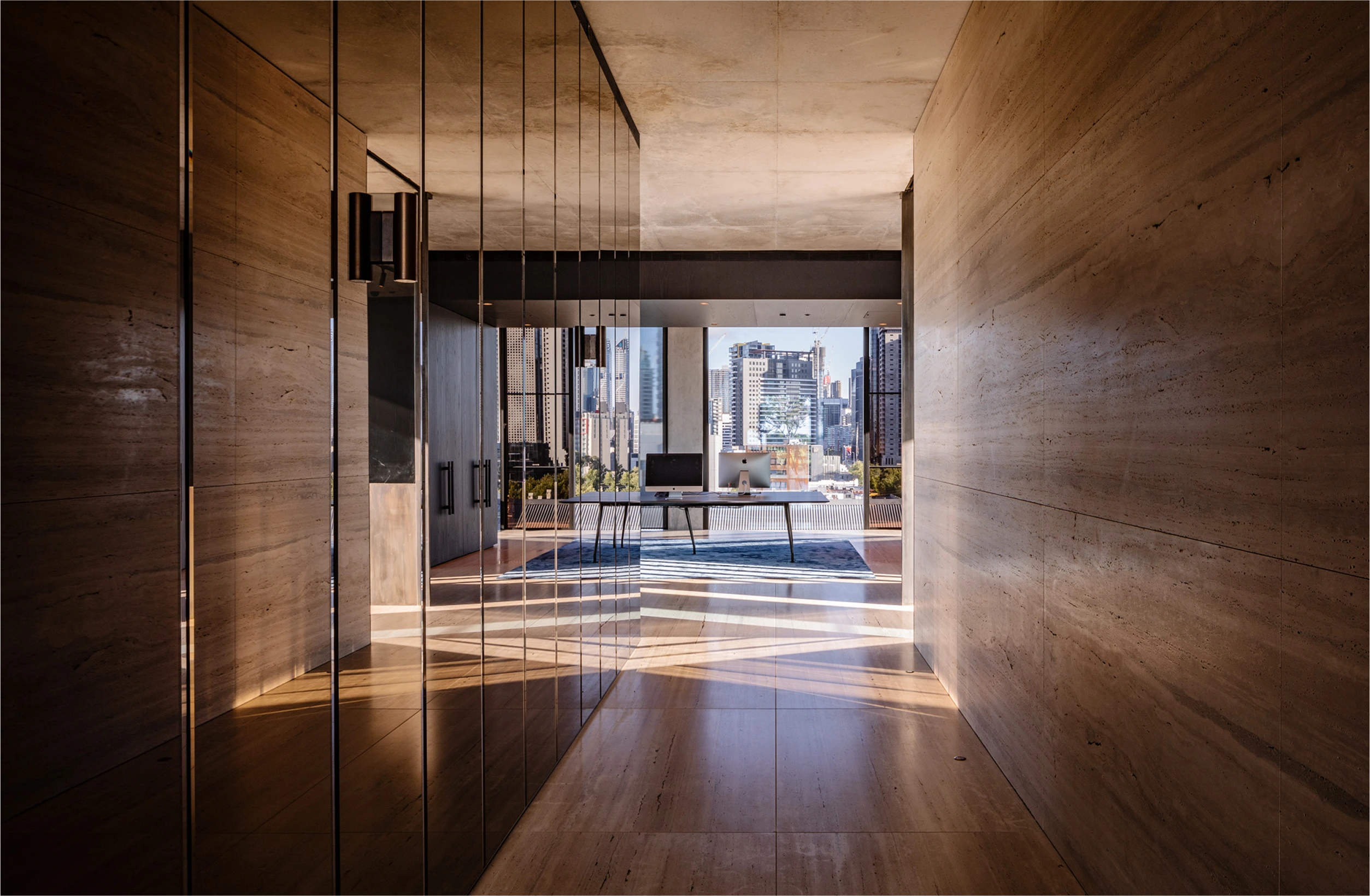
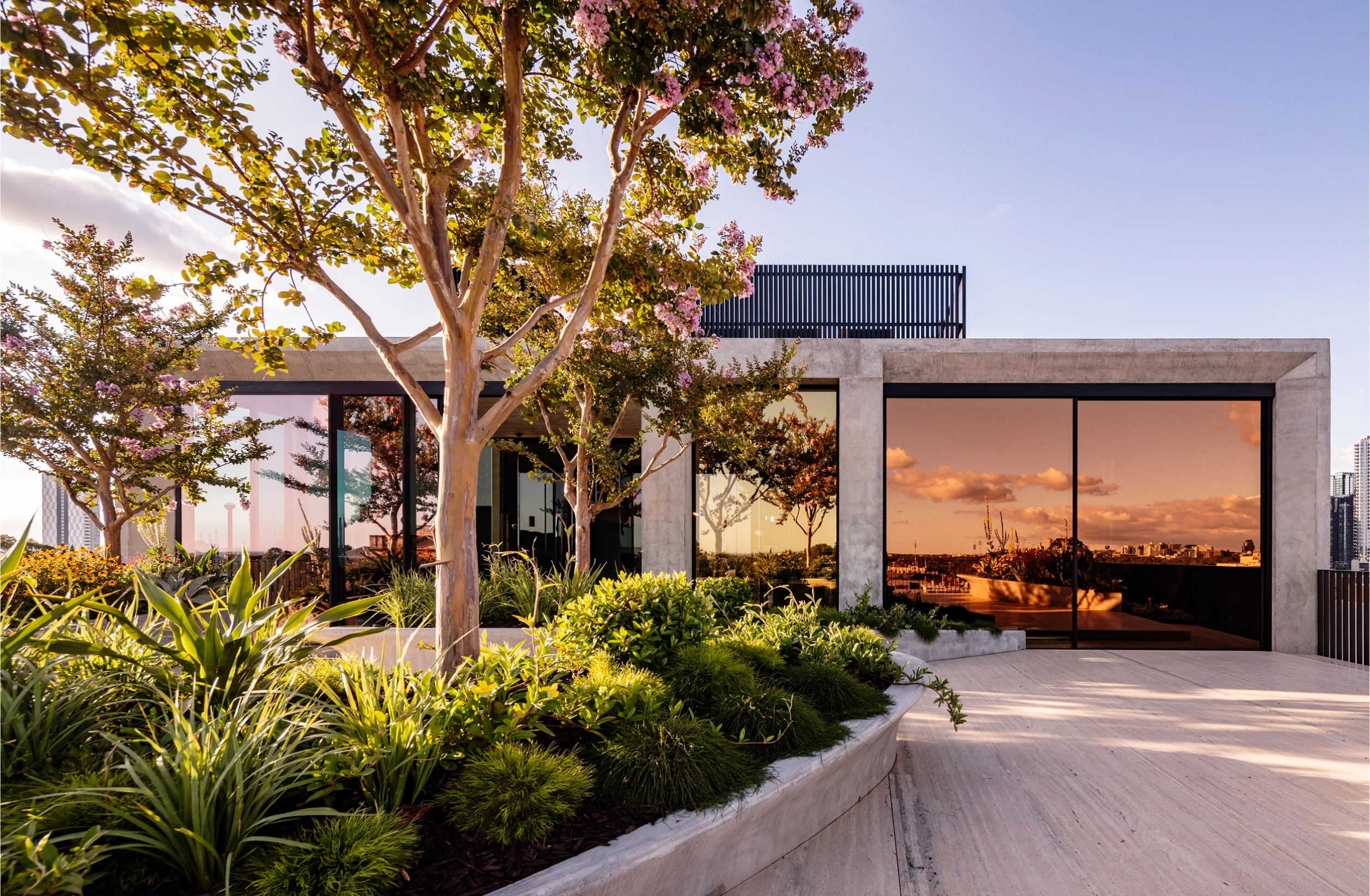
A similar clarity of material thinking appears at Piccolo House in South Melbourne. Here, raw concrete is softened through a layered palette of silver travertine, blackened metals and mirrored glass. The combination creates a building that is decidedly industrial yet unabashedly elegant.
When it comes to interiors, longtime collaborators Hecker Guthrie understand the brief – designing to allow residents as much space for their own personality to shine.
“Many of the people who live in these homes are collectors – of art, furniture, objects. The interior becomes a backdrop for those pieces,” Hecker Guthrie Director Stacey van Harn shares.
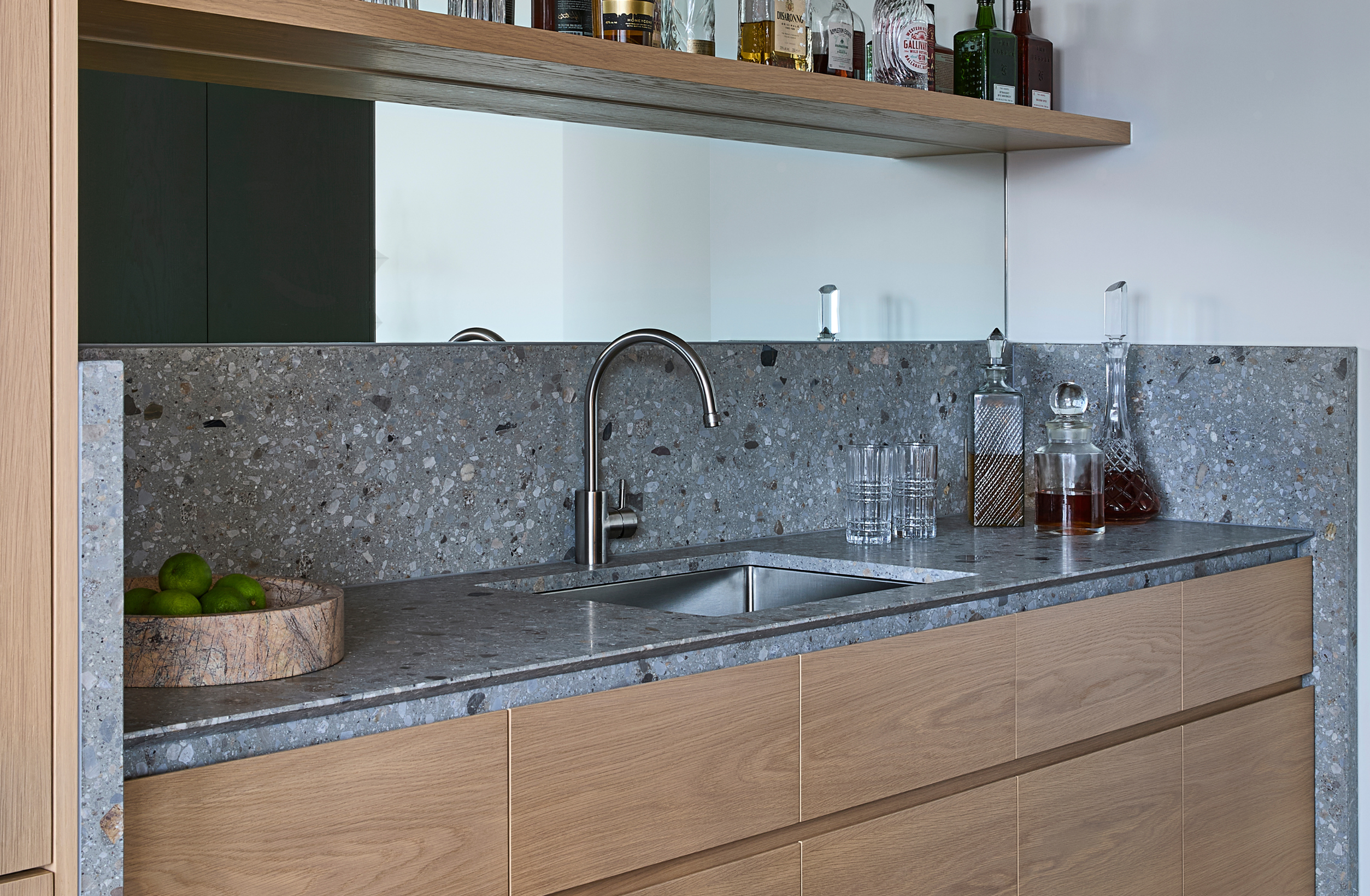
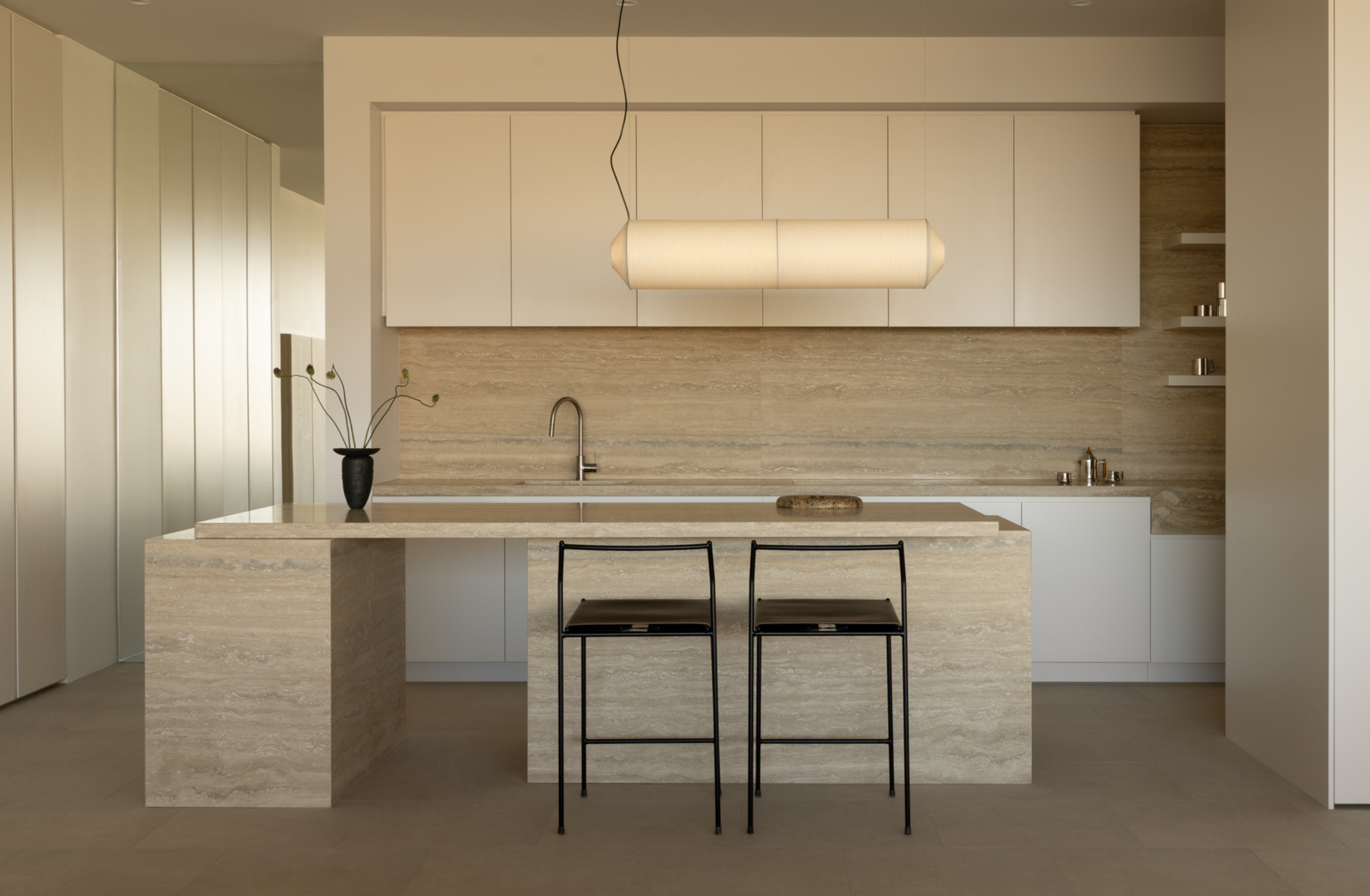
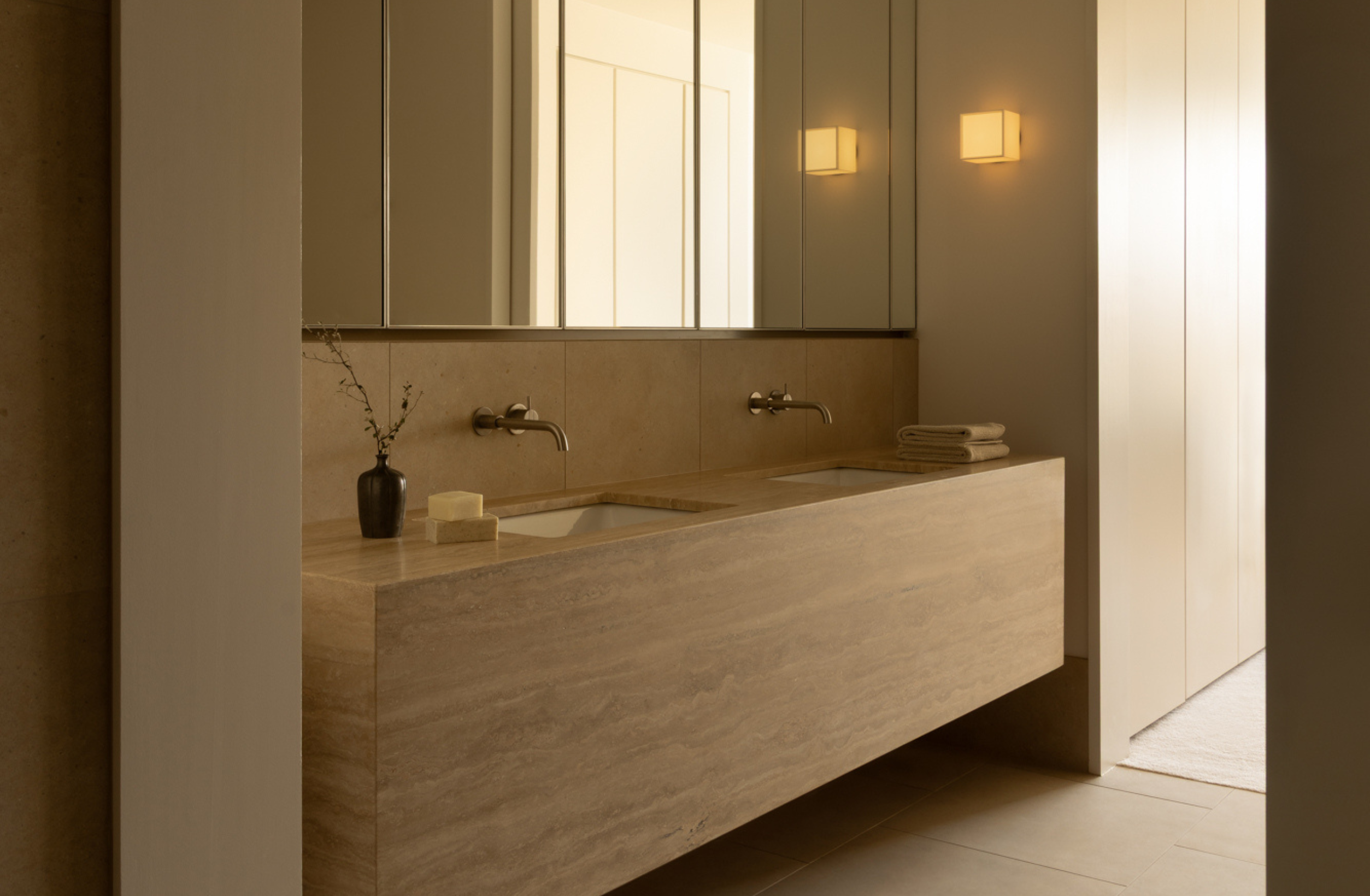
At 18 Barry Street, Kew, travertine becomes the defining material. Used across kitchen benches, bathrooms and fireplace surrounds, the stone brings warmth and weight to the apartments. “Natural stone always requires patience,” van Harn notes. “You’re looking for the right tone, the right movement in the vein – something that will still feel beautiful twenty years from now.”
Across these projects, the materials do more than define a visual identity. They embed a sense of longevity – the idea that architecture should not merely look good when completed, but continue to deepen in character as the years pass.